
Before my last psychedelic ceremony, several people asked me “what’s your intention?” and I struggled to provide a response. Of course, I’m aware there’s a gazillion steps I ought to take to become a fully flourishing human. Yet, nothing in particular felt pertinent.
I’ve often heard people say intention is the most important aspect of a psychedelic journey – the driving force that gives meaning to such experiences. Mostly it’s about personal intention: understanding and processing traumatic events, meeting one’s own demons and seeking to understand them, or simply letting the medicines show us what we need in order to heal.
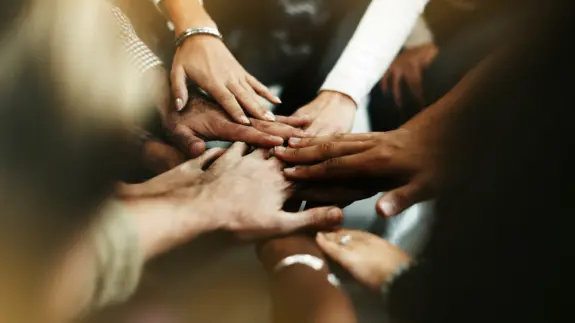
Nonetheless, it became clear that at least in this ceremony, my personal intention, or lack thereof, was obsolete. My healing would in fact be within the abdication of self-motivation. The dissolving of personal desire into a collective prayer for all humans.
The Path of the Red Road
The ceremony was in the lineage of the Red Road, a concept associated with traditions of the Lakota people of the North American Plains. Black Elk, an influential Oglala Lakota holy man, coined the term Red Road as a path to a harmonious, spiritual life. The Red Road doesn’t have a destination per se, but is an ongoing lifepath of interrelationality. It’s about honouring all life: humans, plants, animals, weather, those before us, and those who will come.
Psychedelics weren’t traditionally part of Black Elk’s teaching. However, some groups have begun embedding the peyote, a psychedelic cactus, into Red Road ceremonies. Peyote has been a central sacrament to many Native American groups, including the Lakota, since around the 19th century. The Native American Church is an Indigenous religious tradition that combines the ceremonial use of peyote with Native American spirituality and elements of Christianity. It is one of the largest Indigenous religious movements in North America, with an estimated 400,000 members.
Peyote to Heal the Heart
Whereas LSD and psilocybin are chemically categorised as tryptamines, peyote's active compound, mescaline, is a phenethylamine. These compounds are more structurally similar to MDMA than the tryptamines and can elicit similar experiences of love and empathy. In 2023, a research study found mescaline induced the release of oxytocin, the same hormone that’s released during sex, pair bonding, and breastfeeding, more strongly than all the other tested psychedelics. It’s often called the medicine of the heart, one to heal emotional wounding, and this certainly resonated with my own experience.
In the ceremony, a synergy between the peyote and the group holding led to me feeling completely indifferent from everyone else gathered in the circle. Their prayers – their hopes to overcome obstacles – became my prayer also, and I think perhaps this is the essence of collective prayer. In shared humanity, I yearned for their healing because their wish was indifferent from my wish. And they too yearned for the healing of all of us, and of all the humans and animals and plants in the world.
Similar feelings to MDMA on a dance floor, I also just really truly loved everyone and everything so much. Prayer is about gratitude as much as it is about intention, and the gratitude emanating from my heart felt so raw. In the face of such horrific injustice, greed, and suppression, perhaps peyote has played a role in helping those in the Native American church maintain appreciation and love for humanity – helping maintain the fire to their prayer and communal acts of reverence.
Collective Prayer Across Traditions
Collective prayer is not exclusive to Native American groups. It’s one of the oldest and most universal human traditions. Group prayer is an integral part of Abrahamic religions, taking place in Jewish, Christian, and Islamic places of worship across the world. Hindu pujas (worship) may involve coordinated prostration and chanting among devotees, and certain Buddhist traditions utilise group metta (loving-kindness) meditations to collectively elicit well wishes unto the wider world.
When it comes to psychedelics, there are several groups and churches that combine these substances with group prayer. The Huichol are a group native to Mexico that also use peyote. Every year, pilgrimages to Wirikuta to collect fresh peyote take place, and the group prays collectively throughout the journey, praying for good rainfall, bountiful crops, the sustained health of the climate and both human and more-than-human life.
The Bwiti is a group of West African tribes that use and worship the hallucinogenic Iboga shrub. During ceremonies, participants collectively sing healing songs for themselves and for others, and the instruments themselves are seen as musical prayers.
Collective worship is also central to the Santo Daime, a syncretic religion founded in the Brazilian Amazon that uses the DMT-containing brew ayahuasca. Daime ceremonies, known as trabalhos, begin and end with spoken Christian prayers, and participants pray through synchronised singing and rhythmic movement. This collective action is believed to create a spiritual current known as corrente that binds participants and elevates their spiritual power.
Prayer and Collective Manifestation
The modern language of manifestation is mostly associated with New Age schools of thought, but corresponds with the Daime concept of corrente and other traditional spiritual perspectives. Manifestation holds that we can shape reality through our own thoughts and consciousness. By the law of attraction, the more we raise our “vibration” and positive energy, the more likely the universe will respond positively to our prayer.
In this viewpoint, the more people direct their focus and energy towards the same prayer, the more positive energy accumulates and increases the chance of a prayer unfolding. Coincidence or not, a collective prayer was made before Hurricane Katrina made landfall in America, and it dropped from a category 5 to a category 3 level of damage right before it hit, saving hundreds of lives.
A user on Reddit commented, “I believe in it 100%. I truly think that if everyone in our country, or our county or even our city joined hands and prayed or meditated about manifesting something, I believe it would manifest. There is power not only in intercessory group prayer but also in group meditation. What we do is pool together our collective good energy, which is powerful."
Psychedelics as Godheads
Through increasing interrelationality, psychedelics may amplify collective energy and the potency of a prayer. However, they themselves could also be viewed as an independent force, driving the manifestation of possibility.
The term entheogens, sometimes used in place of psychedelics, means to “generate God from within.” This definition reflects the mystical and spiritual experiences generated by psychedelics. High doses of compounds like DMT and 5-MeO-DMT generate ineffable experiences, which go beyond the usual realm of time and space, and have been likened to “God-realms.” Different psychedelic plants and mushrooms are also described as divine intelligent entities with unique characteristics. In a polytheistic world sense, they could be seen as gods or god-heads themselves, like those of Ancient Egyptians or Greek cosmologies.
To pray is to ask for help from the force of God or a god, and in ceremonies, it’s commonplace to call upon the spirits of ayahuasca, peyote, and salvia to ask for blessings. Whether or not the spirits exist, or it’s simply a matter of personal influence, people have reported events after ceremonies as if the spirits had truly heard them. Unexpected improvements in health issues that were predicted to only get worse, contact from friends people had thought they’d lost, and the presentation of opportunities that seem uncannily aligned to someone’s wants and values.
Individualism in Psychedelics
The publicity around these sorts of outcomes is driving people to travel far and wide to seek psychedelics. Combined with the plethora of research into their therapeutic use, these substances are becoming increasingly sought-after tools of self-development and healing. A global survey found that "personal growth" was the most frequently reported motivation for psychedelic use in 2024.
The shift from psychedelics being used for collective wellbeing to personal healing reflects the individualism that has come to define modernity – that which filmmaker Adam Curtis famously described as "The Century of the Self." Even in rural regions of the Global South, globalisation has begun reshaping the way these substances are understood and used. In the Amazon, for example, many Indigenous communities traditionally drank ayahuasca as a communal sacrament, strengthening social bonds, resolving conflicts, and guiding collective decision-making. Today, however, many people seek out ayahuasca primarily as a means of uncovering and processing personal trauma.
Western psychology individualises healing with the notion of a solitary “hero’s” journey, whereby one looks deep inside themselves to heal. They must determine the roots of their suffering, and understand why they behave the way they do in order to enact changes. Psychedelics are potent aids to this process. The very word derives from the Greek psyche, meaning mind, and deloun, to reveal.
However, for many practising Indigenous groups around the world, healing is not a private process. Rather, it’s a restoration of balance between those who inhabit the living and spiritual worlds. For instance, the Māori concept of health, hauora, entails that the spiritual, mental, physical, and social dimensions must be in balance for wellbeing. Disruptions in family, tribe, and ancestral connections can all play a significant role in illness and mental distress. In traditional Andean societies, healing is closely tied to the concept of ayni – the balance of giving and receiving with community, spirits and land.
“When ayni is disrupted—when we take without giving, when we separate body from spirit, or when we isolate ourselves from community—illness inevitably follows,” writes Dr Elena Villanueva of the Andean Medical Anthropology Institute.
The Addiction to Personal Healing
The individual and wider-network models of healing do not need to be seen as separate, and both can play an important role in wellbeing. The Western psychotherapeutic approach has been highly beneficial for many people. Through increased self-awareness, individuals can develop greater compassion for themselves and, in turn, for others. By recognising their triggers and learning how to manage them, they can build healthier, more sustainable lives.
However, there’s no clear cut-off point between not being self-aware and being self-aware when it comes to our demons and trauma. We’re impacted by so many experiences, and not just our own, but those of our parents and the generations before, which have carried through them. As such, the journey can be never-ending.
I’ve met individuals who seem to go from ayahuasca ceremony to ayahuasca ceremony on this journey of self-searching, with no sense of satisfaction in their progress. There’s always more trauma to process, more shadow work to do.
“...I've been meeting with a lot of people in my mentorship who know a lot about psychology, shadow-work, and have been on the self-development route for years. But instead of feeling accomplished, they never feel like it's enough. So much so that they end up treating shadow work as a part-time job. It's all they think about, and it becomes their whole sense of identity,” writes a therapist on Reddit.
While psychedelics can temporarily dissolve a sense of self, they can also take us inwards and uncover things that make us want to keep digging deeper. But when does this digging stop? Does it just inevitably take us deeper into our own heads and perpetuate the loneliness and self-rumination which leads to psychological suffering in the first place?
Group Psychedelic Therapy
In psychedelic retreats, where a group will spend multiple days to weeks together, the sense of community may play as much of an essential role as the psychedelic experiences themselves. An observational study of 886 psychedelic ceremony participants investigated how communitas, their sense of togetherness, shared humanity, and collective connection, affected outcomes. They found that stronger experiences of communitas were associated with greater improvements in psychological wellbeing and other mental health measures in the weeks following the retreat.
Given such benefits, researchers have begun testing and developing group models of psychedelic therapy. Max Crossland-Wood at Exeter University is researching the outcomes of a group psilocybin program whereby the emphasis is on community-building, as opposed to the psychedelic experience.
“The idea with the community of practice being applied to psychedelics is that you can heal and transform just from being in the community practice from a sense of belonging within the group. And the psychedelic is secondary to that,” he said.
“This is influenced by Indigenous ways of working where the psychedelic is never seen as a mental health treatment but rather a substance that connects people to divinity, source and nature. When we are connected to the world around us, health and wellbeing is a by-product.”
The founder of the group model, Peg Peters, was inspired by working with women in Ethiopia during a water crisis. He observed the way in which women came into solidarity with one another, holding circles whereby they would support one another through embodied listening. Peg was also one of the first people to go through Roots to Thrive, a psychedelic therapy training centre in Canada. The organisation was influenced by traditions of the Native American Church with a similar model of community-based healing.
“Instead of each individual going in with their own intentions and meaning, it’s very much a process of meaning woven throughout the practice. We do these collective intention settings where each individual shares what they think their intentions are, but then the group reflects back what they hear and the individual's intentions deepen through the accumulation of one that people witness and resonate with,” explained Max.
Beyond Personal Healing
Max plans to record a myriad of measurements in his study: the participants’ sense of community and social connection, mental health outcomes such as burnout and sense of meaning in life, and physiological indicators, including gut microbiome measures. The overall aim is to see whether this model can build someone's overall resilience and be a crisis intervention to have in place before prescribing pharmaceuticals.
However, beyond their mental health and healing, I’d be interested to also know the knock-on effects of such models for a wider collective.
Max explained how the therapy programme works as a training ground for someone’s relationships outside of the group, increasing their window of tolerance and compassion when interacting with friends and family. But could this compassion extend outside of someone’s personal network? Would this process of slowly unravelling one's ego increase their desire to help strangers?
Multiple lines of research show that psychedelics enhance a sense of connectedness, both to others and to nature. People can feel a sense of desire to contribute to a better world following a psychedelic journey, having had a deep appreciation for the globe and the experience of being a human.
Gail Badbrook, the co-founder of the international social movement Extinction Rebellion (XR). Gail publicly shared how her psychedelic experiences in Costa Rica with Iboga helped inspire and generate the movement. She called a prayer for the “codes for social change” and soon after, set up XR along with academic Roger Hallam. Freakishly, Rodger joked that he’d given Gail the codes for social change during a meeting, without any awareness of her earlier prayer.
However, while these feelings of benevolence can occur, they’re not always manifested into action. And while psychedelics can temporarily dissolve the ego, they can also lead to ego inflation and a sense of spiritual superiority. I believe framing the psychedelic experiences within the container of a group prayer could be a means to mitigate this potential aftermath. Perhaps even shape it into something of action for the greater good.
A Prayer for Our Times
We are currently living through a period of profound global instability. Humanitarian crises continue to unfold across the world, from displacement and conflict to widening social inequality. At the same time, ecological systems are under unprecedented strain: accelerating biodiversity loss, climate disruption, and the degradation of conditions that sustain life.
It’s clear that helping others, curating a sense of collectivity, is in itself healing, and we need to trust that our own mental predicaments will be softened if we come together and pray for that which is beyond the self. We shouldn’t use psychedelics solely for personal gain, reinforcing a culture of individualism. The culture that has contributed to the very mental health crisis driving the interest in these substances.
Whether inspiring compassion, action, or simply enhancing the potency of an intention, using psychedelics in the context of a group prayer feels more necessary than ever.