
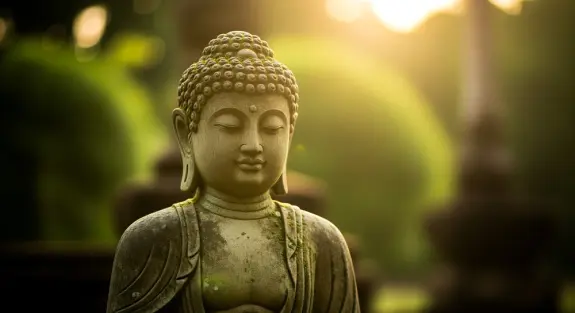
Before we get into this topic, take a moment and think of spirituality. What do you picture? For most, it’s a few common themes: yoga, chakras, meditation, Buddhism or Hinduism, and – increasingly – psychedelics.
All of these fall under the umbrella of religious practices or spiritual concepts that teach people presence, acceptance, and mindfulness, which are essential to a strong connection between the mind, body, and spirit. No two people have completely identical approaches. Some may focus exclusively on following the teachings of leaders like the Dalai Lama or Buddha, while others build their own philosophy based on practices such as yoga or astrology.
As Eastern philosophy has gradually gained a foothold in Western society, more people are studying it and integrating its aspects into their own beliefs. They’re also incorporating concepts from other deeply metaphysical parts of the world, such as South America, creating a sort of hodgepodge of spirituality that borrows from the old while still becoming something entirely new.
To see an example of this, take a look at the spiritual gurus combining Buddhism with psychedelics. These two practices, once entirely at odds with each other, hit the West at the same time and now regularly come together at retreats throughout Europe and the United States.
While the discourse surrounding this new combo is ongoing (and often heated), there are incredible, undeniable benefits that can come from joining an ancient spiritual practice like Buddhism with modern-day psychedelic use. This may be particularly true if you’re interested in finding real meaning from psychedelics, or just want to deepen your sense of self. No matter what your motivation is, meditation can help everyone – especially if you’re interested in starting or continuing psychedelic use.
How Does Buddhist Philosophy View Psychedelics?
Buddhism is one of the largest and oldest religious traditions in the world, based on the ancient teachings of the first Buddha (Siddhartha Gautama) in the 6th century BCE. Unlike monotheistic religions such as Christianity or Islam, it emphasizes personal spiritual development over the worship of a deity.
The most well-known teachings include concepts like the Four Noble Truths or the Eightfold Path (found in the Dharma). By following these practices, students can work toward balancing their karma, ending their suffering, and achieving enlightenment. Those who successfully do so gain Nirvana, which allows them to be free from the karmic reincarnation cycle of death and rebirth.
Reaching enlightenment is hard work, only arriving through a combination of meditation, following ethical living guidelines, practicing mindfulness, and staying devoted to these daily rituals. This allows the practitioner to clear themselves of hatred, negativity, and greed. Buddhists believe it cannot be achieved overnight – instead, it comes from consistency throughout one’s entire life.
Because they adhere so firmly to this devoted lifelong practice, Buddhism doesn’t tend to view psychedelics very fondly. It sees them, and all substances in general, as poor habits and “shortcuts” that cheapen or hinder a true spiritual practice. Some also worry that people who take psychedelics without an existing spiritual practice will lack the ability to meaningfully integrate those experiences into their lives.
Furthermore, traditional Buddhists see psychedelics as a form of earthly attachment that contradicts the Fifth Precept, one of their ethical rules for living. The other Precepts include cardinal sins like murder, lying, and stealing, and thus are taken very seriously by devout practitioners.
At a glance, it seems as though there is no room for Buddhism and psychedelics to coexist – but new philosophies are written all the time, and the growing field of spirituality is finding ways to bring them together.
Why Some Choose to Go Against the Grain
Psychedelics and Buddhism entered into Western society at the same time in the 1950s, creating an explosion of New Age spirituality that dominated the culture throughout the 1960s and 70s. Hippies were born, fast adopting practices like yoga, meditation, and fervent mushroom trips into their lives.
Western spirituality has morphed significantly since then, evolving into a subtle staple of the modern cultural melting pot. Psychedelics and spirituality have irrefutably inspired music, movies, businesses, and everything in between, even if not everybody personally ascribes to them.
It’s easy to see, then, how tripping and Buddhism have come to be so intertwined. Many in places like Europe or the United States are not inherently raised under Buddhism, but we do have access to LSD or shrooms. Trying those out, whether for fun at 20 or to seek deeper truths at 50, is usually the first time that a Western-raised person experiences ego dissolution and the “oneness” of the universe – the ultimate goal of Buddhism.
By opening people’s minds and souls in this way, psychedelics can serve as a stepping stone to a heightened spiritual practice. They may help people overcome plateaus in self-development, reconnect with their spiritual Source, or dissolve limiting beliefs ingrained by societal standards. Integrating your psychedelic experiences afterward with Buddhist meditation can – when done correctly – deeply enhance your overall spirituality. The trick is approaching it with the right mindset, intending only to work on yourself rather than spiritually compete with others.
Should You Prepare for Psychedelics with Meditation?
The short answer: yes, absolutely.
Meditation and psychedelics act on the brain in surprisingly similar ways. A study conducted in 2005 revealed that meditators have a thicker prefrontal cortex than non-meditators – meanwhile, psychedelics lead to rapid neural growth in the same region of the brain. They have both been shown to reduce the symptoms associated with mental illnesses such as depression and anxiety, and they both are capable of leading to an increase in traits like mindfulness, kindness, and self-love.
And, if this is what they can do separately, you can only imagine the benefits that may come from using them together.
Meditation and psychedelics provide separate but complementary services to each other. This is where preparation comes in: meditating before a psychedelic experience prepares you for the mental journey. “Set and setting” is a common phrase heard when planning a trip, focusing on two vitally important factors for a good time: a healthy mindset and a calm, euphoric location and vibe. Meditation can play a pivotal role in achieving that strong mindset by helping to teach acceptance and composure, which may be necessary during a challenging trip. You’re also more likely to have a positive experience overall.
Your preparation doesn’t have to stop when the trip begins. A more recent trend is meditating during the psychedelic trip, something commonly found nowadays at newly emerging therapeutic psychedelic facilities or spiritual retreats. It promotes deep inner thought, fostering emotional resilience and healing from traumatic experiences.
Psychedelics help one to rapidly access states of emotional balance, interconnectedness, and peace with life. Continuing a meditative practice afterward can then assist with maintaining those feelings and emotions for weeks, months, or even years post-trip, carrying them forward without having to necessarily revisit the psychedelic state.
Building a Grounding Buddhist Meditation Practice
There are countless varieties of meditation out there, and all of them have their place. Buddhist meditations, however, typically fall under two main umbrellas: Samatha (concentration) and Vipanassa (insight). From there, many other practices emerge, including Metta Bhavana (loving-kindness), Kinhin (walking), or Anapanasati (breath mindfulness).
Choosing which form of meditation to practice will depend on your ultimate personal goals. Before you engage in your trip, take some time to determine what you’d like to get from it and find a form that suits those needs. Meditation beginners may do best trying Samatha first, learning to focus on the breath and quiet the mind. People struggling with negativity toward themselves and others could gravitate toward Metta Bhavana, which uses positive affirmations to retrain the mind.
Truly, there are no wrong answers. All meditations have a shared focus: embracing and accepting where you are in the present moment. Through this mindfulness, you can learn to more clearly perceive your reality, calm extreme emotions, quiet your ego, and release the need to control every outcome.
Once you determine how you’d like to proceed, all that follows is the practice. Simply sitting down anywhere and meditating can feel daunting, so try breaking it down into a few steps:
- Create a calming environment you can return to daily. This can be a place in your home, your favorite park, or anywhere else you can be completely free of distractions. Make sure it’s comfortable, and provide yourself with something to focus on, like a candle.
- Choose a consistent time each day to meditate. It can be as little as five minutes a day at first, and increase as you see fit.
- Sit and begin. Set a timer if needed, and find a position you can maintain without fidgeting. Bring your attention to your breath, focusing on it without forcing your mind to be quiet. Thoughts will come; let them pass without latching on. When you lose focus, gently return to your breath.
- After meditating, practice returning to that headspace throughout the rest of your day. If you find your head buzzing with stress while walking your dog, return focus to your breath and clear your thoughts for as long as you are able. You can do this as often as you like, and you’ll soon find that your calmer mindset lasts longer each time.
The actual specifics of your practice may vary based on the form of meditation you choose to follow, and there is no harm in experimenting with a few to see what works. The important thing is staying devoted – to your routine, yourself, and your connection with the Source. If you miss a day, or even a few days, you can always begin again.
Choosing Calm
Psychedelics can feel, at times, like information overload. The first time you try them, your perceptions of everything around you may shatter. You may learn more about yourself and the greater universe than you thought possible in the span of a few hours. It’s a colorful, expansive, and unexplainable experience. You can think of it as sprinting; it will bring you closer to your destination, but may leave you weary.
Buddhist meditation, while bringing about a similar dissolution of preconceived notions, happens on a slower scale. It’s the recovery walk after your run, when your muscles cool down and your body benefits from the workout. It’s your opportunity to reflect on what you just gained and prepare yourself for what’s to come.
Many choose to take one and leave the other, and it may work for some. Bringing them together, however, can help you achieve a flow state before, during, and after trips that you may not have previously thought possible.
If you practice thoughtfully, you may just find a level of self-love and understanding capable of helping you clear karma and step a little bit closer to reaching true Nirvana.