
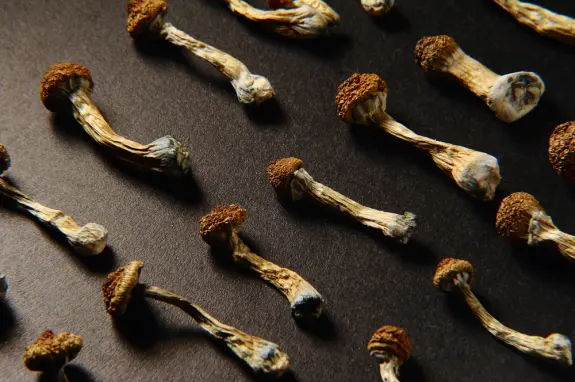
July 2026 has proven to be a potentially pivotal month for the field of psychedelic medicine. The industry as a whole is moving towards aggressive institutional consolidation. This distinct shift away from speculative academic research is largely being driven by sweeping new legislative mandates in the United States. This has resulted in historic corporate acquisitions of psychedelic-focused companies by the global pharmaceutical establishment.
In parallel to the unprecedented pace of corporate expansion, the scientific community continues to investigate the biological realities of these compounds. This month alone, scientists have mapped the neuroplastic window of psilocybin at a micro level. Researchers have also produced the first modern neuroimaging scans of the ancient botanical medicine, mescaline.
For clinicians and researchers based outside of America, the pace of legislative change and continued advancements in research perhaps offer a preview of the regulatory and economic forces that will at some point begin to reshape healthcare across Europe and the rest of the world. While European institutions are often characteristically cautious, the sheer volume of both money and data being generated across the Atlantic is testing the evidence-based approach to its limits.
Navigating the international trajectory of the psychedelic industry as a whole requires in-depth consideration of exactly how the multibillion-pound pharmaceutical investments and government interests are leading this research. Is it purely for profit, or in a safe and controlled manner that will be necessary for the world to begin to redefine potentially the entire future of psychiatric care?
US House Codifies Psychedelic Research Mandates
The US House of Representatives recently passed important amendments to the National Defence Authorisation Act for fiscal year 2027. This officially codified the massive political push towards large-scale psychedelic research in the US and embeds psychedelic medicine directly into its federal infrastructure.
This guarantees a state-funded psychedelics research program at the Department of Defense (DOD) for an additional six years. This means that guaranteed funding and institutional support will be available to researchers through to September 2033. These new mandates also require the Department of Veterans Affairs (VA) to designate an official to manage and coordinate all activities related to potential emerging psychedelic treatments. The main focus here is on the substances ibogaine, psilocybin, and MDMA. This official will be tasked with coordinating directly with the Food and Drug Administration (FDA) to simplify the treatment timeline for military personnel suffering from both post-traumatic stress disorder (PTSD) and traumatic brain injury. VA Secretary Doug Collins said in a statement that:
As we have discussed previously, this massive push towards state-sponsored infrastructure is a departure from traditional research funding models. Researchers in Europe and the UK rely on uncertain and limited funding from sources such as academic grants, corporate sponsorship, or private philanthropy. The American military itself is now legally required to run large-scale clinical trials over the next decade. This will result in a continuous influx of structured, complex, and, most importantly, long-term clinical data. The US government has sent signals to global firms and wider markets that psychedelic medicine is now fair game. Locking this future research timeline until 2033 shows that this field has become a core component of the US’ national health strategy. The shared volume of data is very likely to also force international regulators to alter their plans.
USFDA Issues Final Guidance for Psychedelic Clinical Trials
A regulatory milestone has been overcome in the US. The Food and Drug Administration has just published its finalised guidance detailing the specific requirements for clinical trials for companies that are developing potential psychedelic therapies. The initial draft was released for public comment more than three years ago, and it is only now that this complex administrative framework will begin to dictate how both national and international drug developers design their clinical protocols.
The FDA explicitly acknowledged the unique challenges associated with studying compounds which are psychoactive. The main focus when studying substances like psilocybin, LSD, and MDMA has to be on the consistent problem throughout research of functional unblinding. As described in the document itself:
Put simply:
- Because the effects of psychedelics are so obvious, both trial participants and clinical observers will likely know whether an individual has been dosed.
- This introduces a high risk of bias, resulting in data which may inflate the seeming effectiveness of the potential treatment.
To mitigate these issues, the FDA has deemed it necessary for companies and researchers to make specific design compromises:
- Sponsors should incorporate the use of central raters blinded to treatment allocation and visit number.
- For randomised clinical trials, the use of a blinding questionnaire for both subjects and investigators/observers/raters (i.e. asking each whether they think the subject received active drug or placebo).
- An expectancy evaluation questionnaire (i.e. assessing subjects’ expectations about potential drug effects).
- Pre-randomisation and at the end of treatment to improve data interpretability despite functional unblinding should be considered.
On top of this, the guidance says that treatment developers must track the long-term durability and efficacy of any treatment before approval for a substance will be granted. This is due to the fact that “many of the conditions that these drugs are purported to treat typically persist for months or years.” A major “public hearing on the therapeutic use of psychedelics, scheduled for 14 September” is to gather further expert testimony.
For European pharmaceutical companies who are aiming to break into the increasingly lucrative American market, these guidelines establish expensive and demanding barriers to entry. The sheer amount of experimental and methodological rigour required will likely shape future global trial standards.
Eli Lily Makes Landmark Psychedelics Acquisition
Eli Lily, currently the world's largest pharmaceutical company, this month announced the outright acquisition of the prominent developer of psychedelic therapies, AtaiBeckley. The takeover was valued at up to $3.8 billion, with a $2.8 billion upfront payment. This represents the most significant monetary endorsement of psychedelic therapy by the mainstream. This marks the end of an era in which psychedelic-focused start-ups were viewed as potentially high-risk ventures reserved for biotech firms or niche philanthropic organisations.
This acquisition means Eli Lilly immediately secures full ownership of AtaiBeckley’s existing pipeline of potential treatments. Particular focus will be placed on
This demonstrates definitive commercial confidence that psychedelics will become a new standard in mental health treatment, one which will be standardised, scaled, and manufactured at a large scale for global distribution.
This confidence will more than likely trigger a wave of activity across the sector as a whole. Rival pharmaceutical conglomerates will seek to acquire the remaining independent developers of potential psychedelic therapies just before the first wave of regulatory approvals of the substances.
The large injection of capital will only serve to further increase the rapid acceleration and industrial scaling of the industry. Once again, though, for other areas of the world which will soon be affected by these acquisitions in the US, there will be challenges. For example, public healthcare systems like the National Health Service (NHS) in the UK will likely struggle to integrate these therapies into an already stretched system.
Psychedelic therapies are rapidly transitioning into high-cost, patented pharmaceutical products that are owned by multinational corporations. A wide-ranging cost-benefit analysis will be necessary for all public health entities to determine whether these treatments will be scalable and affordable for ordinary people.
Mapping the Neuroplastic Window of Psilocybin
In a recent article in the Cornell Chronicle, David Nutt has illustrated how collaborative research has led to our understanding of the effects of psilocybin. We now have a picture of how the molecule interacts with the human brain, at a microscopic scale. This has provided new evidence of the neuroplastic window of psilocybin – how long psilocybin continues to affect the brain after its usage.
Researchers at the Cornell NanoScale Science and Technology Facility utilised advanced neuroimaging, designing an array of “flexible, conformable electrodes made of an organic polymer…a few microns thick, with nanometer resolution.”
This builds upon previous work by Alex Kwan. In 2022, Kwan and his team “found that a single dose of psilocybin increased the number of neuronal connections in a mouse brain by about 10%.”
These findings line up well with another study published in Nature Communications. This study demonstrated that a single dose of psilocybin induces “physical changes in the brain that remain detectable for as long as a month.”
This validates the concept of a neuroplastic window following the use of a psychedelic like psilocybin. Psychedelics act as temporary disruptors, breaking the rigidity of entrenched neural pathways associated with conditions like chronic depression and trauma. Psilocybin seemingly allows for the rapid formation of new connections.
However, we must temper our expectations. A recent article in Psychology Today emphasises the temporality of this neuroplastic window.
The window will always eventually close. Psychedelics do not permanently cure psychiatric conditions. Rather, they create a transient month-long opportunity for change. This really highlights the absolute necessity for structured integration therapy following any pharmacological intervention prior to the neural architecture solidifying once more.
Polish Researchers Highlight Lack of Evidence for Microdosing and ADHD
Utilising high-dose psychedelics in the treatment of depression and trauma is continuing to gain increasing scientific support. However, their efficacy for tackling neurodevelopmental conditions like attention deficit hyperactivity disorder (ADHD) remains controversial. A systematic review conducted by researchers at Wroclaw Medical University in Poland has concluded that any current evidence is insufficient. Despite a surge in public interest in the treatment of ADHD, through the practice of microdosing psilocybin or LSD, the underlying clinical data currently available is lacking.
Researchers conducted an exhaustive analysis of the available literature revealing that only “five studies met the inclusion criteria.” This included only one single randomised controlled trial. Professor Donata Kurpas, one of the authors of the paper, noted that while observational studies frequently report short-term cognitive improvements in participants, the issue of expectation bias and participant self-selection heavily compromise any perceived results.
On top of this, there are issues with the treatment as regards its effects on the brain when compared to the regions which ADHD affects. ADHD is a condition of dysregulation within the dopamine and noradrenaline pathways of the prefrontal cortex. Classic psychedelics almost exclusively interact with the 5-HT2A receptors. This, therefore, seems to be a mismatch of the potential treatment with the condition itself.
Any positive effects perceived by those microdosing the substance are seen as more than likely a placebo response. This review serves as a reminder that lifestyle trends, regardless of their popularity, cannot be confused with rigorous scientific evidence-based medicines.
First Modern Brain Scans Reveal Mescaline’s Unexpected Effects
Researchers have published the first modern neuroimaging data showing the effects of mescaline on the brain. Mescaline is a psychoactive phenethylamine found in the Peyote and San Pedro cactus. It has a long and documented history of indigenous use stretching back at least 5700 years. Thus far, however, it has been widely overlooked in a modern clinical context in favour of classic tryptamine psychedelics, such as psilocybin and LSD.
A new study published in Neuroscience Bulletin has mapped the brain activity of rats under the influence of mescaline. The scans revealed a mechanism of action that fundamentally diverges from what psychedelics' effects are currently perceived to be.
Rather than disrupting the networks of the brain that govern the default mode network, mescaline aggressively targets the cerebellum. The imaging illustrated that mescaline lessened the normal operation of the cerebellum while simultaneously increasing its functional connectivity to the hippocampus, thalamus, and sensory cortices. Simply put, it took the blinders off.
The cerebellum acts as the brain’s sensory gatekeeper, filtering out and making environmental data understandable before it reaches conscious awareness. Its suppression means the brain is forced to process raw, unfiltered sensory input. This could go a long way to explaining the very distinctive sensory and visual effects of mescaline. This separates it from its more popular modern pharmaceutical alternatives and potentially offers an entirely new neural pathway for researchers investigating conditions that are more focused on sensory processing itself, as opposed to mental health.
What Ancient Art Reveals About Modern Psychedelic Medicine?
Renewed scientific focus on ancient botanical compounds like mescaline also requires a corresponding cultural reevaluation of these substances. Prehistoric societies with a long history of use of psychedelics interacted with them on a profound level. A recent essay in Psyche has explored the connection between prehistoric cave art, archaeology, and the current rapid expansion of the medicalisation of psychedelics. The essay essentially argues that ancient art can actively guide modern psychiatry.
For millennia, indigenous cultures did not view these substances as isolated and individualistic medical treatments designed for a particular purpose. Rather, they were the catalysts for an array of boundary-dissolving experiences that became deeply embedded within so many structured, communal rituals and spiritual frameworks. These various forms of religious and artistic expression provided a collective meaning and reinforcement of social cohesion as a whole.
As modern Western healthcare providers try to fit these profound, often transcendent experiences into the framework of care, there is an inherent risk of stripping away this additional value. As the article explains it:
A large part of the power of their effects, aside from the specific brain chemistry they promote, comes from the contextual architecture surrounding them. The essay posits that the long-term success of the modern psychedelic renaissance cannot rely solely on science, as “healing, even when it involves a powerful substance, is embedded in story.”
The medical community must find ways to both respect and integrate the meaning or even spiritual qualities of the psychedelic experience, acknowledging that psychological healing is not solely reliant on brain chemistry but also is an inherently social and cultural process.
Final Thoughts
This month (as with the previous) has once again brought the paradox of modern psychedelic medicine into focus. On the one hand, the industry is finally reaching a state of sufficient institutional standardisation to begin to reach the mass market. Long-term research mandates in the US provide the grounding for an oncoming onslaught of new data. The veracity of this data will also be ensured by clinical trial frameworks and multibillion-pound investments from corporate giants. Psychedelics are becoming legitimate, scalable and increasingly profitable medical tools.
These are not substances, however, which we can reduce to simple pills you can take solely for their effects on brain chemistry. The increasing confirmation of a month-long neuroplastic window also highlights the necessity for human-centric psychological support throughout and following any experience.
Looking ahead, the primary challenge for researchers and policymakers across the world will be navigating this transition safely, without undue influence from corporate interest, alongside the integration of wider cultural context to the space as a whole. The industry must find a way to scale these treatments in a rigorous standardised manner, taking into account safety data and affordability without raising the profound holistic nature of the psychedelic experience, which at heart is what makes these compounds so unique in the history of medicine.