Beyond THC: How Cannabis Terpenes Shape Your High

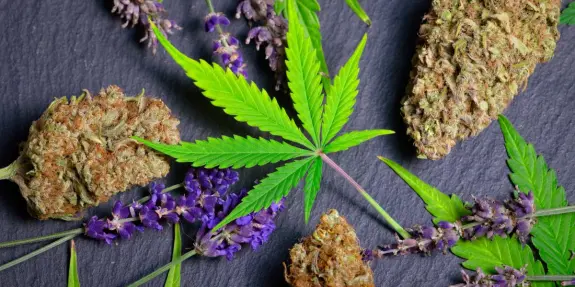
Even though it is the foundation of a multi-billion-dollar legal, global industry, and a likely far more lucrative black market, scientific knowledge and research on cannabis is still far behind that of other high-value crops. This is mainly a result of legal restrictions that have stopped the majority of researchers from studying cannabis, its constituents, and their effects on humans.
Cannabis has been described as a “biopharmacy”, which contains over 100 compounds, including tetrahydrocannabinol (THC), which causes a “high,” and cannabidiol (CBD), which does not. The other compounds consist of myriad other, as yet barely studied, minor cannabinoids, as well as tiny compounds called terpenes. Terpenes are not unique to cannabis; they are the basic constituents of all essential oils. You find them throughout nature, from pine trees to orange peel. Terpenes are widely accepted as responsible for the smells and tastes of a huge number of substances. That familiar, skunky, signature scent of cannabis? That’s terpenes.
They are synthesised in the trichomes, the tiny, glandular hairs on the surface of cannabis plants, which have been described as “a cellular metabolite factory”. The trichomes are also responsible for producing THC and CBD. Terpenes have multiple natural purposes. They help the plant survive, deter hungry predators, and lure potential pollinators. But do they have more of an effect on cannabis’ powerful therapeutic and consciousness-altering effects than previously thought?
Indica vs Sativa
Cannabis indica and Cannabis sativa are two types, or strains, of the cannabis plant. As plants, the two strains look different. Indica is a shorter, stockier plant with broader leaves and a thick, woody stalk. Sativa is taller, slimmer, with thin leaves, and they grow more rapidly, but take longer to mature. There are also many types of hybrid plants with properties of both strains.
More than 1,000 strains of cannabis have been bred during the past several decades. It is critical that patients are aware of the different effects available, especially when considering cannabis’ medical effects. Some varieties of cannabis are most appropriate for particular diseases and ailments, but not others. Choosing the right strain is paramount. However, sativa and indica have more differences than simply their physical characteristics. Each strain of cannabis has a different ratio of CBD to THC, and this is known to alter how they affect your body. But plant strain is only one of the things that impact this.
Honestly, if you’re still using the widely understood “indica/sativa” labels to predict the effects of a particular strain of cannabis, you are behind the curve. The hybridisation of strains alone, in the vast majority of circumstances, means the indica/sativa label, even at this low level, is not an adequate means of differentiating strains and their effects. Modern research is beginning to reveal that a strain’s terpene profile is a far more effective means of determining strain effects. With legalisation spreading, especially in the U.S, ever savvier patients and consumers are demanding strains with specific terpene combinations. Post-2012 legalisation triggered a 435% spike in terpene testing in Colorado, for example. Indica/sativa, at this point, seems to be outdated marketing, with little relevance outside of their cultural ubiquity and presence in the vernacular.
The first, albeit wholly unscientific, terpene selection protocols emerged in much the same way as the early selective breeding of staples like corn, or even animals like cows. Ancient Persians burned frankincense (rich in the well-known terpene, pinene) in temples for "mental clarity", unknowingly leveraging terpenes’ psychoactivity. 12th-century Arabian hashish makers prioritised fragrant, sticky plants, again seeking out terpenes without knowing it. The 1970s "landrace rush" saw breeders like Neville Schoenmaker chase Thai sativas not for their THC or CBD content, but their powerful limonene haze, birthing terpene-rich legends like Haze Bros’ "Original H".
Our understanding of differences in strains and terpenes’ seemingly wide-ranging effects in cannabis is rudimentary at best. As a result of this, there is concern about a lack of consistency with regard to the terpene and cannabinoid composition of different types of cannabis. This is particularly pertinent when claims of particular medicinal properties or health benefits attributed to cannabis and its constituents are concerned. This would benefit from a thorough investigation.
Biosynthesis and Ecology
The building blocks of our current understanding of terpenes are isoprene units, tiny 5-carbon chains which link together like Lego to form different terpene molecules. The particular class of terpenes is determined by how many of these isoprene units link up:
- Monoterpenes (2 units = 10 carbon atoms): Zesty, lemony, citrus.
- Sesquiterpenes (3 units = 15 carbon atoms): Earthy, peppery.
- Diterpenes (4 units = 20 carbon atoms): Bitter, coffee.
- Triterpenes (6 units = 30 carbon atoms): Fresh grass, herbal.
But why does cannabis invest so much energy in these tiny, aromatic molecules? Survival. Terpenes have multiple uses:
- Bug repellent: Limonene and pinene attack pests like natural pesticides.
- Attracting pollinators: Floral linalool or sweet terpinolene attracts insects like bees.
- Stress protection: Terpenes help stabilise cell membranes, which can help to protect the plant from potentially harmful UV rays.
The CRISPR technique (Clustered Regularly Interspaced Short Palindromic Repeats) was developed in 2012 by the French researcher Emmanuelle Charpentier and the American researcher Jennifer A. Doudna. It has brought about a revolution in genetic engineering and could have such a wide-ranging impact that both received the Nobel Prize in Chemistry in 2020.
CRISPR is a particularly precise gene editing technique, which allows for the severing of the DNA sequences which form genes. Genes dictate traits. For example, in cannabis, this may be as simple as leaf colour, or as complex as the rate of THC/CBD synthesis. This incredibly accurate, specific method of breeding new variations of the plant on a gene-by-gene basis will allow future growers to hone in on specific terpenes to facilitate their desired effects on the individual consumer.
Key Terpenes and Effects
Let’s completely place both THC and CBD percentages/ratios to the side and focus solely on the perceived effects of each individual terpene.
Myrcene – Relaxation. With its earthy, musky aroma, it is the most common terpene in modern cannabis strains. High-myrcene strains like Granddaddy Purple deliver that classic couch-lock effect traditionally associated with "indica" strains. Scientific investigation suggests it perhaps boosts THC’s absorption too, potentially increasing the pain or insomnia-relieving properties of certain strains.
Limonene – Euphoric. The zingy, citrus scent of strains like Lemon Skunk is perceived to promote mood elevation and stress relief. The science suggests possible anti-anxiety and even anti-tumour potential.
Pinene – Stimulation. The pine-like aroma of classics like Jack Herer is thought to cut through brain fog associated with cannabis use. This may be due to pinene’s possible ability to counteract THC-induced short-term memory loss. It can also act as a bronchodilator, widening airways, ideal for asthmatics.
Linalool – Relaxation. The familiar scent of lavender. Floral and delicate, it is the backbone of many relaxing strains like LA Confidential, often in combination with Myrcene. Research also links it to reduced anxiety and protection from seizures, making it a potentially powerful tool for medicinal cannabis users.
Caryophyllene – Anti-inflammatory. Found in spicy strains like Girl Scout Cookies, it actually binds directly to CB2 receptors (like cannabinoids themselves). This can provide powerful, targeted inflammation relief.
Terpinolene – Uplifting/Sedating. Floral, herbal, see: Ghost Train Haze.
The Entourage Effect
So, as our knowledge of terpenes’ effects grows, we can begin to think of cannabis strains as a whole, with the ratios of all elements working together to produce particular effects. While THC might be the main chemical responsible for the powerful head change, we know that THCA isolate is widely available and effective. Without terpenes and other cannabinoids, the experience is flat, dulled somehow. Cannabinoids and terpenes work better together. This is what is known as the entourage effect.
The entourage effect is the theory that all of the compounds in cannabis synergise to create effects greater than any single molecule could achieve alone.
When University of Arizona researchers tested terpenes like linalool and humulene alongside cannabinoids, they found that terpenes activated CB1 receptors similarly to THC, which amplified the perceived pain relief without any additional unwanted side effects.
A rigorous Johns Hopkins/University of Colorado study gave subjects pure THC or THC + limonene. The limonene group reported significantly less anxiety than THC alone. Limonene didn’t just add a citrusy flavour; it actively modulated THC’s psychoactivity to assist its positive effects in outweighing any potential negatives.
For medical users, this means that full-spectrum extracts (with terpenes intact) will often outperform isolated CBD or THC. For recreational consumers? It explains why pure THC distillate/isolate highs feel harsher than whole-flower experiences.
So, how do we begin to re-categorise cannabis strains so consumers are more accurately able to determine the effects they want from them?
Chemovars
Step one is to bury the indica/sativa, body high/cerebral buzz myth, as the science obviously refutes its effectiveness as a means of categorisation.
When researchers analysed 140 commercially labelled strains, they found zero consistent differences in terpene profiles between "indicas," "sativas," or hybrids. The chemistry of the “energising sativa” you purchased may well be near-identical to a so-called "indica" from the same exact source.
Enter chemovars, a classification system that actually works. Instead of vague growth traits, outlandish names, or THC/CBD percentage, chemovars categorise cannabis by its complete chemical fingerprint:
- The dominant cannabinoids and ratios of minor cannabinoids.
- The complete terpene analysis and their ratios.
This revolution in specificity matters for medical patients, too. Targeting chronic pain? Look for a Type I chemovar with high caryophyllene for its additional anti-inflammatory qualities. It also allows growers to hone in on specific traits far more effectively, improving the speed and accuracy with which new strains can be developed.
Bottom line? Strain names are marketing poetry. Chemovars are scientific truth. As testing advances, expect your dispensary menu to shift from:
- Sour Diesel - Sativa
- Sour Diesel - Fuel Chemovar, THC-dominant, 24%, High pinene