
Introduction
Life & Career

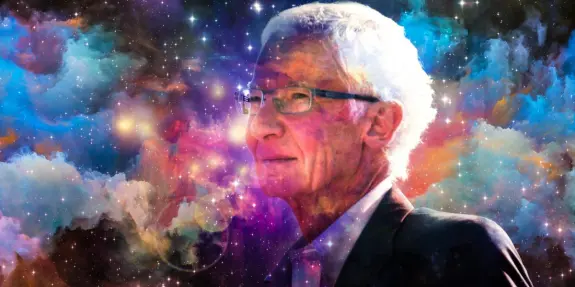
Roland Griffiths was born in Glen Cove, New York but grew up in the Bay Area of California. He completed his psychology degree at Occidental College and then went on to obtain a PhD from the University of Minnesota in 1972. His doctoral research focused on the effects of barbiturates on behaviour, specifically how pentobarbital influences extinction learning. After completing his studies, he joined the faculty at Johns Hopkins University where he spent his entire scientific career. During his time at Hopkins, Griffiths made groundbreaking contributions to the understanding of psychoactive drugs and played a significant role in the field of psychedelic research. Even as an undergraduate, his work was highly regarded, as demonstrated by his first published paper in 1969. This paper, which was republished in 2003, provided rigorously controlled data which challenged the findings of a recent study in Science that claimed RNA extracts could transfer memory from one animal to another. This ability to tackle out-there theories with seriousness illustrates Griffiths' combination of healthy scepticism combined with an ability to ‘entertain the fanciful’.
Facing a career lull in the mid-1990s, Griffiths rediscovered meditation, leading to a profound shift in perspective. He had first tried meditation as a graduate student in the early 1970s but the practice failed to resonate with him. He tried to follow the directions, still his thoughts and pause, if not stop the endless thinking - but every time the voice in his continued unabated. Two decades passed before Griffiths gave meditation another shot. He described meditation as:
The practice of gratitude…of the absolute wonder that we are these highly evolved sentient creatures who can hear and see and taste and locomote and build things. We have developed technologies and science for discovering things. We have developed culture. And yet the most interesting piece of all is that we are aware that we're aware. I'm here, and I know I'm here.
The Griffiths Effect
While Griffiths' work wasn't the sole catalyst for the psychedelic renaissance, his reputation as a hard-nosed scientist, and the attention-grabbing results of the 2006 study made him a key figure in overcoming scepticism. Unlike the countercultural associations of the past, Griffiths approached psychedelics with scientific rigour, earning him recognition as the:Anti-Timothy Leary.
Psilocybin produced a range of acute perceptual changes, subjective experiences, and moods including anxiety. Psilocybin also increased measures of mystical experience. At 2 months, the volunteers rated the psilocybin experience as having substantial personal meaning and spiritual significance and attributed to the experience sustained positive changes in attitudes and behaviour consistent with changes rated by community observers.
Griffiths and his team at Johns Hopkins were able to conclude with some certainty that When administered under supportive conditions, psilocybin occasioned experiences similar to spontaneously occurring mystical experiences.
The ability to reliably manufacture these intense experiences will facilitate scientific investigations of their causes and consequences.
Mystics and meditators have probed consciousness for millennia. For the last 17 years, hundreds of research volunteers in Griffiths' lab have experienced these states after taking psilocybin. His experiments have shown startling results. Participants were more able to shake off persistent depression, quit smoking after decades of failed attempts, and even, in the case of people facing life-threatening cancers, transcend the fear of death
This raised hopes that psilocybin might receive FDA approval as a treatment for some mental health conditions. Ultimately, Griffiths believed that these experiments provide insight into the nature of consciousness.
We get so lost in the stories of our lives that we sometimes forget what an incredible thing it is to be aware.
Your Brain on Psychedelics

In an interview with Johns Hopkins Magazine shortly prior to his death, Griffiths explained at length what he believed the effects of psychedelics to be, as well as their potential as a catalyst for change.
There are neurochemical, neurophysiological, and brain network changes that likely account for the effects we feel. These effects may result in enduring changes apart from the experience.
Under the right conditions, and in the right environment, people have experiences:
that can be described as transcendent, an interconnectedness of all people and things. Along with this sense of connectedness arises a sense that the experience is precious—or sacred, if you want to use religious terminology —and that it is absolutely true.
It really boils down to the golden rule: Do unto others as you would have them do unto you.
A changed worldview and sense of self will result in different choices for how to behave going forward.
Beautiful opportunity to move this research forward in what I would consider the most impactful ways because there are…gaping holes in what we don't know.
The Ultimate Trip

A New York Times interview with Griffiths in early 2023 provides a poignant explanation for the end of his life:
He has expanded the knowledge of how we might better learn to live. Now he is learning to die.
Transcendently positive feelings about existence and…the great mystery of consciousness…we all know that we’re terminal.
Wake up!
Griffiths credits his meditation practice, and psychedelics experiences for this worldview. Griffiths practised Vipassana meditation, which comes out of the Buddhist tradition. This is a form of mindfulness meditation which focuses on the transient nature of mind, of consciousness, and one comes to see that thoughts, emotions, are temporary.They’re appearances of mind that you needn’t identify with. That practice — and some experience with psychedelics — was incredibly useful because what I recognized is that the best way to be with this diagnosis was to practise gratitude for the preciousness of our lives.
We Can’t Go Back to the 60s

Now that the psychedelic renaissance is in full swing, and in the face of the rapidly expanding psychedelic industry, along with many celebrity endorsements, Griffiths, along with his colleagues at Johns Hopkins, emphasised the necessity to balance this newfound culture-wide excitement with scientific scrutiny.
Acknowledging that psychedelics don't work universally, they advocate for precise determination of risks and benefits.
Griffiths stressed the importance of not “flashing back to the 60s”. His mission has alway been on the approval of psychedelics as therapeutics.
It seemed to me, from the very beginning, that we would need to proceed in baby steps, starting with evaluating safety and efficacy through existing regulatory and culturally accepted channels such as medical use. Otherwise, we run the risk of replicating the mistakes of the 1960s.
There are many today who of the opinion:
The train's out of the station, there's absolutely no way to stop this.
Although research to date suggests these compounds are relatively safe, there are real risks that can result in injury, death, or onset of new debilitating psychiatric conditions. At a minimum we need to anticipate such problems rather than having the fanciful idea that there are no risks.
Legacy

When Griffiths first received his Cancer diagnosis he stepped down as the director of the Center for Psychedelic & Consciousness Research and began to focus on encouraging the widespread acceptance of secular spirituality, exploring universal questions about human experience and the inherent interconnectedness of our experiences, highlighting the profound effects of psychedelics for shaping our ethical and moral beliefs. He began:
The Roland R. Griffiths, Ph.D. Professorship Fund in Psychedelic Research on Secular Spirituality and Well-Being
To provide a platform for these ideas to be discussed and studied in greater detail. He explains his motivation in the New York Times Article:This idea for the endowment came right after my diagnosis when I started reworking the charitable contributions section of my will. My initial thought was to make a donation to effective charities such as GiveWell. But then I thought, "What would I really want to give?" The answer was to establish a professorship and fund to support a rigorous, world-class program of empirical psychedelic research on life-transformative experiences in the service of human flourishing.
We know that these kinds of mind-opening experiences, whether naturally occurring or occasioned by psychedelics or other interventions, can change personality, worldview, and life trajectories, and give rise to prosocial tendencies having important ethical implications, especially in the face of increasing existential threats, like the continuing development of biological and nuclear weapons, artificial intelligence, etc.
Conclusion

Even after his death Griffiths remains a pivotal figure in the continually evolving landscape of psychedelic research. His lifelong commitment to scientific rigour, in the face of first illegality, ridicule, and then more recently over-excitement shines through. His endless curiosity, and belief in the transformative potential of the human mind continues to shape the future of psychedelic research. To conclude, in his own words:
I want everyone to appreciate the joy and wonder of every single moment of their lives. We should be astonished that we are here when we look around at the exquisite wonder and beauty of everything. I think everyone has a sense of that already. It’s leaning into that more fully. There is a reason every day to celebrate that we’re alive, that we have another day to explore whatever this gift is of being conscious, of being aware, of being aware that we are aware. That’s the deep mystery that I keep talking about. That’s to be celebrated!