
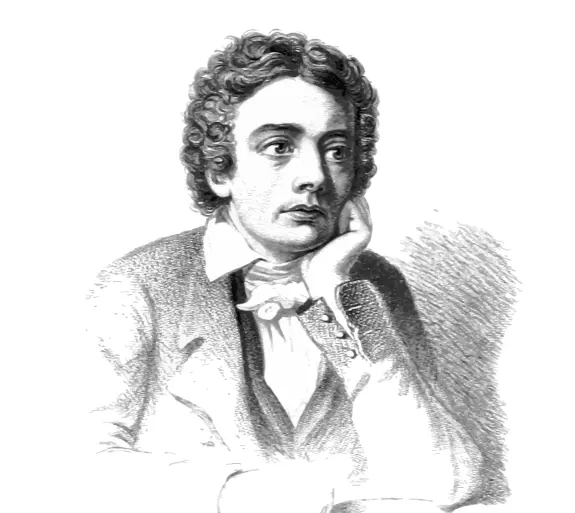
The term ‘negative capability’ was introduced in 1817, in a letter written by English poet John Keats to his brothers. His description of the concept is concise: “when man is capable of being in uncertainties, Mysteries, doubts, without any irritable reaching after fact & reason”. While Keats used negative capability to describe an essential quality of great poets, the concept proves highly relevant to psychedelic experiences.
Uncertainties, mysteries, and doubts are an inseparable part of psychedelic experiences, playing a role not only during trips, but also in the aftermath. Coming in contact with the mysterious may stir a variety of reactions. It can generate insight and reflection; inspire humility, awe, and spirituality; and lead to ontological shock, cynicism, and anxiety. In the academic world, what has been called the mystical or the weirdness of psychedelics is a matter of debate inside and outside of psychedelic research.
From its birth in the literary world, negative capability has taken on a life of its own, through which we can learn about its essence. Its uses in social theory, psychology, and leadership all point to processes of change, a clear link to psychedelics, yet in its artistic understanding, it shares even more common ground with altered states.
The Mindset of a Great Artist
In its original meaning, negative capability relates to a poet’s reaction to uncertainty, or more accurately, to their ability to refrain from reactiveness. As Keats notes, uncertainty triggers an “irritable reaching after fact & reason”, which negatively capable people don’t feel or can overcome. In the words of literary scholar Li Ou, those who possess negative capability are “able to resist the instinctive clinging to certitude, resolution and closure”.
There are several characteristics which have been used to describe the mindset or stance of a great poet in this sense. The first one is openness. Li explains that great poetry is written when one is open to a “full-scale human experience that is too copious and diverse to be reduced to a neatly unified or conceptualized system.”
How does this mindset lead to great poetry? Keats’s ideal is a “chameleon poet”, having no identity, no self, ready to embody and identify with various aspects of life, whether they are other humans or nature itself. Such an attitude enables an author to embody each of his characters fully and produce a complex picture that doesn’t necessarily correspond to conventional morality, norms, and assumptions about the world. A chameleon poet does not ‘take sides’ with any character or try to teach the reader a lesson. Instead, they neutrally “live” each of the characters, adopting their worldview, feelings, and potentially contradictory ideas about reality.
Keats’s highest example of negative capability is Shakespeare, and among his contemporaries he alluded to John Milton. In Milton’s Paradise Lost, Satan himself becomes a complex hero instead of a flat character to be hated. More recent examples would be Bulgakov’s The Master and Margarita, where Satan also plays a lead role, or Nabokov’s Lolita, featuring a morally dubious hero.
In order to produce a great work of art full of sensibility, its author needs to shed their preconceived knowledge about the world and themselves (the chameleon’s own color), feel into what is, and reflect it in their poetry (change its colors). In the absence of negative capability, we find didactic tales and stories reaffirming what we already know: good is good, bad is bad, and the border between them is crystal clear.
From Poetry to Psychedelics
Translating this notion into psychedelic states, negative capability can be related to multiple psychedelic phenomena and phases. The first one pertains to one’s mindset during the trip. It is the capacity to “let go” of one’s anticipations and conceptualized self and world, as well as the need to fix, understand, and resolve the psychedelic experience in those terms. It is a form of letting go of certitude, of accepting a mysterious or weird experience without knowing where it would lead, often not knowing what it is about while it happens.
To be negatively capable is to be open to the actual vastness and complexity of experience, and one cannot possess this openness unless one can abandon the comfortable enclosure of doctrinaire knowledge, safely guarding the self’s identity, for a more truthful view of the world which is necessarily more disturbing or even agonizing for the self.
This quote has nothing to do with psychedelic experiences. It is a clarification of negative capability supplied by Li Ou, who just happens to sound like the Terence McKenna of poetry. I insist on the non-psychedelic background to highlight that negative capability does not concern only out-of-this-world mysteries like the meetings with DMT entities and ancestors. It has to do with our most basic beliefs and assumptions. Our perception of the world, like our metaphysical, spiritual, or religious beliefs, is related to our perception of ourselves, including our supposedly stable and coherent character, and it offers clues into phenomena like consciousness, intuition, and experiential knowledge, which we do not fully understand. What Li calls the comfortable enclosure of doctrinaire knowledge includes our “knowledge” about psychedelics, what they do and how they do it.
Negative capability can also be linked to mystical experiences like ego-death, unification, and fusion. Keats describes the negatively capable poet as having no self, and it is precisely that fact which allows them to identify with anyone and anything – to connect with all there is. This idea is reminiscent of the notion of emptiness in Asian philosophies, and of the power of Yin: the receptive, dark, and passive. There too, the way to enlightenment passes through intuitive knowledge rather than logic and consecutive analysis.
Lastly, the integration process can also benefit if one is able to stay negative. First-time, strong, and meaningful psychedelic experiences often stay unclear and unresolvable for a long time past the trip. Keats speaks about “remaining content with half knowledge”, without running after “the truth” and feeling the need to be right. Negative capability presents a sort of flexibility, an ability to stay with questions instead of securing answers, which also echoes the idea of psychedelic-induced neuroplasticity.
Negative Capability Sets Sail
From its literary nest, the concept of negative capability has travelled through social theory, leadership, and psychology, and following these iterations can broaden our understanding of it. According to philosopher Roberto Mangabeira Unger, negative capability is what allows certain individuals to rise above what he calls the “false necessity” of socially constructed norms, systems, and institutions. Tolerance for uncertainty and the use of the imagination enable us to conceive of possible alternatives and bring about social change.
Here too, the concept is closely related to a sort of neuroplasticity on an individual and social level. In order for change to happen, we need to make room for new ideas by giving up the certainty that the current system offers, and let the imagination do its creative work.
Unger focuses on negative capability in a context of bottom-up-led social change, but leadership and organizational studies focusing on top-down management also find it interesting. Following military slang turned corporate, contemporary fast-paced reality is described as VUCA: volatile, uncertain, complex, and ambiguous. The acronym was introduced towards the end of the 1980s to describe the post-Cold War context, but current developments such as COVID-19, AI, and the climate crisis seem to make it even more relevant.
In order to survive and flourish in a VUCA environment, models (doctrinaire knowledge) are insufficient. Leaders and entrepreneurs need negative capability if they are to stay calm in the midst of chaos. In this context, chaos is a confluence of opposing ideas and unforeseeable developments, a complex and mysterious reality that exceeds our knowledge and understanding.
Psychoanalyst Wilfred Bion adapted negative capability to describe the capacity of the analyst to be patient until clarity and coherence emerge from the chaos of unconsciousness. Additionally, he highlighted the capacity to stay open and remain in uncertainty as the path to psychic growth. By forgetting what you already know and what you want, in other words, your (past) memories and (future) desires, you make room for new insights and ideas.
In his article for Aeon, Paul Tritschler links negative capability to the scientific advice of English biologist Thomas Huxley from 1860: “Sit down before fact as a little child, be prepared to give up every preconceived notion, follow humbly wherever and to whatever abysses nature leads, or you shall learn nothing.“ This quote explicates the tight relation between negative capability and learning. How can we make discoveries if we search from a position of preconceived knowledge?
If we look at all these examples together, what stands out is a state of open receptiveness and a waiving of the need to be able to understand and explain everything that is happening. Li Ou stresses that negative capability is fundamentally experiential. It is about capturing experience in its complexity and wholeness rather than conceptualizing or theorizing it.
As a common factor, change plays a double role in the various applications. On the one hand, it is a characteristic of the initial environment, which triggers anxiety and running after a fixed (unchanging) truth. The VUCA reality, a patient’s unconsciousness, and a psychedelic trip are constantly changing, chaotic environments. On the other hand, it is the outcome of a process enabled by negative capability, manifested as artistic creation, psychic growth, scientific discovery, or social change. This bridge towards insight, creativity, and novelty is why Keats linked negative capability to great poetry.
This state of open receptiveness and acceptance of change (not grasping) has deeper roots in various spiritual traditions. Here is how Blaise Pascal describes it in Pensées, about 150 years before Keats’s negative capability:
We sail within a vast sphere, ever drifting in uncertainty, driven from end to end. When we think to attach ourselves to any point and to fasten to it, it wavers and leaves us; and if we follow it, it eludes our grasp, slips past us, and vanishes for ever. Nothing stays for us. This is our natural condition, and yet most contrary to our inclination; we burn with desire to find solid ground and an ultimate sure foundation whereon to build a tower reaching to the Infinite. But our whole groundwork cracks, and the earth opens to abysses.
Let us therefore not look for certainty and stability. Our reason is always deceived by fickle shadows; nothing can fix the finite between the two Infinites, which both enclose and fly from it.
By acquiring knowledge, Pascal notes, we may stand a little bit higher, but are still infinitely removed from understanding reality. For example, with the aid of knowledge, we have extended our lifespan by about a decade, yet the duration of our lives is still infinitely removed from eternity.
Similar ideas can be found in one of the most famous Daoist quotes of the Zhuang-Zi from about 2000 years ago. His tip for accessing the ceaselessly changing Way (Dao) is: “Forget the years, forget norms, let yourself be stirred by the boundless.” Like Keats, Zhuang-Zi insists on “forgetting” doctrinaire knowledge, which is too partial and simplistic to capture the nature of reality and experience.
In the psychedelic context, scientific advancements in understanding psychedelics and protocols created for clinical trials and therapies are becoming a body of knowledge that should guide us in psychedelic states. At the same time, Keats and the others warn us that clinging to knowledge prevents us from accessing a deeper, more truthful, and complex reality. Is there a way forward?
Imagination, Beauty, and Truth
Instead of relying on knowledge, great poets arrive at a truthful reflection through beauty, and this is where imagination comes into play. According to Keats, “what the imagination seizes as Beauty must be truth—whether it existed before or not”. For a great poet, he says, “the sense of Beauty overcomes every other consideration, or rather obliterates all consideration”. In short:
"Beauty is truth, truth beauty,—that is all
Ye know on earth, and all ye need to know."
Keats associates the imagination with creative power, not only in the specific sense of artistic creativity but also in the sense of divine creation. Alluding to John Milton’s Paradise Lost, he writes that “the Imagination may be compared to Adam’s dream—he awoke and found it truth.” Funnily, Adam’s “dream” was no regular dream, but a vision he was granted in an altered state of consciousness, of God opening his left side to create Eve from his rib. When he awoke, there she was.
Alexander Shulgin was battling with similar questions during a peak experience in one of his strongest trips ever. When asked about it in an interview for MAPS, he described this creative power:
Suddenly you are running the show, you are God, you are whatever it is—I was walking over towards the lab, just amazed, and we had a little cat up the hill a ways. And I looked at the cat, and somehow I got the cat to look at me. And that cat just bolted right up the hill as far and as fast away from me as it could go. I just, you know, gave it the message… not verbally. I could do that kind of thing. I could make a damn hose wrap in another way, lying on the ground… If you can make a cat run away from you out of total fear—is that God?
Shulgin was probably one of the world’s most experienced psychonauts, and still, after a short while in this blissful and powerful state, he started getting scared, wondering if and when it would end. “It’s a really scary thought”, he says, “to be able to control everything totally.” He was happy when the drug effects started drifting away.
His descriptions in the interview and in the documentary Dirty Pictures paint a picture of divine chaos. “Everything and anything that occurs is at your command”, so these mind-states are “where you play with spirituality, but also you play with power.” He talks about a state where time does not exist, and everything happens simultaneously, “probably people would say [it] is a definition of God: the entire operation, with no time passing whatsoever—absolute concurrence.”
Stories as old as the Bible tell us about the anxiety people feel when they come in contact with the divine. When Moses realizes God is speaking to him through a burning bush, he covers his face in fear. In Paradise Lost, when the angel Michael reveals the future to Adam in visions, Adam can’t handle it. He is tormented and scared to the point that he wishes he hadn’t seen any of it. In response, Michael stops the visions and tells him the rest of the story in words, reckoning that divine wisdom can be too overwhelming for humans.
The whole story behind Paradise Lost, Adam and Eve’s expulsion from the Garden of Eden, is a story about lacking negative capability. The sin, eating from the tree of the knowledge of good and evil, demonstrates their incapacity to remain “content with half knowledge”. With negative capability, perhaps they could have stayed in the beauty and bliss of the Garden of Eden.
The European Pendulum Swinging Between Heart and Head
From a perspective of cultural history, the tension between beauty and intuitive knowledge on one side and science and logical reasoning on the other can be traced back to Plato’s quarrel between poetry and philosophy. Indeed, Keats writes in another letter that “what shocks the virtuous philosopher, delights the Chamelion poet.”
Keats was a poet of the Romantic Era, a movement emphasizing beauty, truth, and powerful emotionality. Historically, it was born as a reaction to the Enlightenment period, also known as “the Age of Reason”, followed by scientific Positivism highlighting logical reasoning again. This supposed schism separates the arts and humanities from the sciences, spirituality and religion from atheism, intuition from intellect, feeling from reason, subjective from objective, idealism from materialism, and, by extension, the feminine from the masculine.
In the extended psychedelic community, these forces coexist, represented by scientific articles and indigenous worldviews, medicalization efforts and artistic and spiritual use. Rather than looking at them as opposing forces fighting for superiority, Asian philosophies like Daoism and Buddhism see them as complementary poles; one cannot exist without the other. One way or another, the most important lesson Keats can teach us is to accept our uncertainty about the world, and learn to stay calm and receptive in its presence. It is good advice for psychedelic experiences, for art, and for life in general.